

low emissivity glass meaning
Precision measurement is the foundation of quality manufacturing, and master ring gages serve as the gold standard for dimensional verification in industrial quality control. These precision instruments, along with ring gauges for sale , custom ring gages , and ring gauge sets , ensure that manufactured components meet exact specifications.This article explores the critical function of master ring gages in maintaining measurement integrity, compares different types of ring gauges , and highlights their applications in high-precision industries. Manufacturers and wholesalers seeking reliable ring gauges for sale will find valuable insights to enhance their quality assurance processes. Understanding Master Ring Gage and Their Importance Master ring gages are reference standards used to calibrate other measuring tools, such as ring gauge sets and working gauges. They are manufactured to ultra-tight tolerances (often within ±0.0005mm) and serve as the benchmark for ensuring measurement traceability in compliance with international standards like ISO and ANSI. Key advantages include: Calibration Reference – Used to verify the accuracy of working ring gauges and inspection equipment. Traceability – Linked to national etymology institutes for certification. Long-Term Stability – Made from wear-resistant materials like carbide or hardened steel. Quality Assurance – Ensures consistency in high-volume production environments. Industries such as aerospace, automotive, and medical device manufacturing rely on master ring gage to maintain stringent quality standards. Interchangeability – Facilitates easy replacement and interchange of parts without compromising on accuracy, enhancing production efficiency and reducing downtime. Precision Engineering – Crafted through advanced precision engineering techniques to meet the most demanding specifications and applications. Cost-Effective – Serving as a long-lasting calibration standard, they reduce the need for frequent calibration of other measuring tools, thereby lowering overall maintenance costs. Customization Options – Available in various sizes, ranges, and configurations to suit specific industry requirements and measurement challenges. Global Acceptance – Recognized and accepted worldwide as a reliable means of measurement traceability, facilitating international trade and collaboration across different regions and industries. Continuous Improvement – Manufacturers continually enhance the design and materials of master ring gages to incorporate the latest technological advancements, ensuring they remain the gold standard for precision measurement. Innovative Applications – Beyond traditional uses, master ring gages are finding innovative applications in emerging fields such as additive manufacturing and nanotechnology, where precision is paramount. Compliance Assurance – Their adherence to stringent international standards ensures compliance with regulatory requirements, minimizing the risk of legal and financial penalties associated with non-conforming products. Types of Master Ring Gage and Their Applications Different ring gauge serve specific purposes in quality control. Below is a comparison of common types: Type Primary Use Tolerance Grade Best For Master Ring Gage Calibration standard for other gauges h4-h6 (Ultra-precise) Etymology labs, certification Go/No-Go Ring Gauge Quick pass/fail inspection h7-h9 (Standard) Production line checks Custom Ring Gages Specialized dimensions & materials Tailored to needs Unique part verification Ring Gauge Set Multiple sizes for varied inspection h6-h8 (Precision) Workshops & QC departments For industries requiring absolute precision, investing in a master ring gage ensures compliance with the highest quality benchmarks. How Master Ring Gage Enhance Quality Control Systems Integrating master ring gage into quality control processes provides several critical benefits: Prevent Measurement Drift – Regular calibration with master gages ensures inspection tools remain accurate over time. Reduce Scrap & Rework – Early detection of out-of-tolerance parts saves costs. ISO/AS9100 Compliance – Required for certified manufacturing processes. Improve Supplier Accountability – Validates incoming part dimensions before assembly. Companies using ring gauge set calibrated against master ring gage report fewer defects and higher customer satisfaction. Selecting the Right Master Ring Gage for Your Needs When purchasing ring gauges for sale , consider: Material – Carbide for extreme durability, steel for general use. Tolerance Class – h6 for calibration masters, h8-h9 for production checks. Certification – Look for DIST-traceable calibration documentation. Customization – Custom ring gages may be needed for non-standard parts. Wholesalers and manufacturers should partner with suppliers offering certified master ring gages to meet industry demands. Master Ring Gage FAQs What is the difference between a master ring gage and a working ring gauge? A master ring gage is a high-precision reference tool used to calibrate working ring gauge , which are used daily for part inspection. How often should master ring gage be calibrate? Annual calibration is recommended, though high-use environments may require semi-annual checks. Can custom master ring gage be made for unusual part shapes? Yes, custom ring gages can be designed for tapered, threaded, or asymmetrical dimensions. Why are carbide master ring gage more expensive than steel? Carbide offers 3-5x longer lifespan and minimal thermal expansion, making it ideal for critical applications. Do ring gauge sets include master gages? Standard ring gauge set typically include working gauges; master ring gage are sold separately for calibration.For manufacturers and wholesalers, stocking certified master ring gage and ring gauge set ensures reliable quality control. Our precision ring gauges for sale meet the strictest industry standards, with options for custom ring gages tailored to unique needs. Contact us today for bulk pricing and calibration support!
about
low emissivity glass meaning
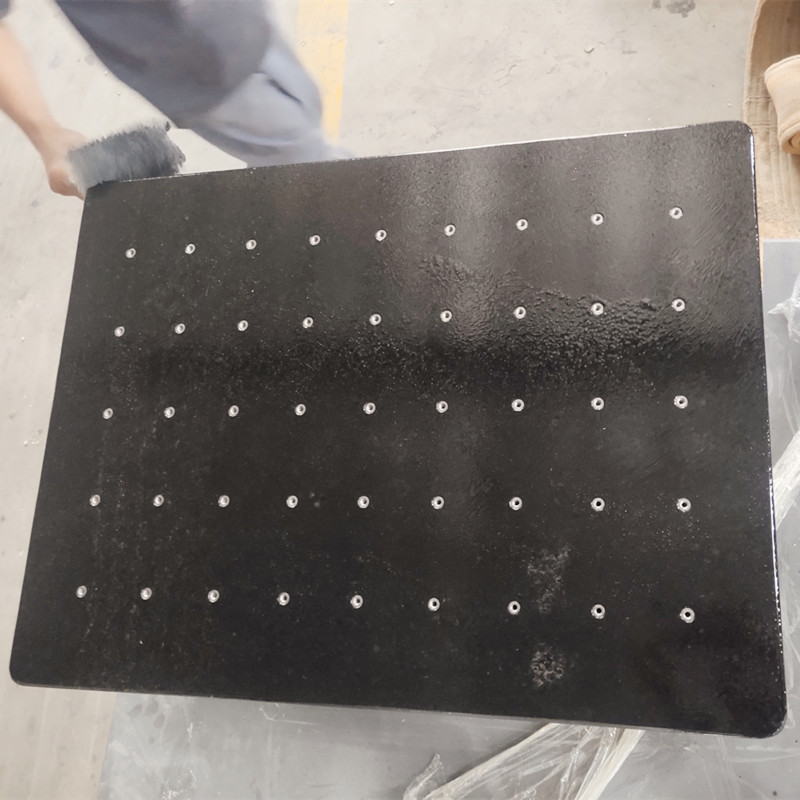
Difference between Gage and Gauge A gauge is a measuring instrument that reproduces a quantity in a fixed form. Its points are as follows. ① itself directly reproduces the unit of measure, that is, the nominal value of the gauge is the actual size of the unit of measure, such as the block itself reproduces the unit of length. Cast iron platform ② In the structure of the general lack of measurement mechanism, no indicator or moving parts. Such as the measurement block is only a physical reproduction of the unit of measure. ③ due to the lack of measurement mechanism, such as not relying on other measuring instruments, can not directly measure the measured value. For example, the block should be equipped with a kilowatt-hour meter and an optical meter. Therefore, it is a passive measuring instrument. Marble platform Gauge is a measuring instrument that converts the measured quantity into an indication or equivalent information that can be seen directly. Its points are as follows. Level (1) itself is not. The unit quantity is not the low reproduction, but the indication value or equivalent information obtained through conversion. Such as display value, digital, pulse signal, sound and so on. The conversion in the definition is a key point. For example, if the indicator value of a percentage meter is 0.01mm, the needle has a large displacement, which is realised by an amplifying mechanism. These values do not in themselves reproduce the unit value, but only the magnitude of the measured value. Pendulum Gauge ②There is a measuring mechanism in the structure, and there is an indicator or movable measuring elements such as a pointer and a cursor. Gear Runout Gauge ③ can directly measure the measured value of the object, is an active measuring instrument. In general, the gauge structure is simple, easy to operate, easy maintenance, low price, accuracy to meet the general measurement requirements. Gauge has the advantages of high sensitivity, high precision, small measuring force, but the structure is complex, expensive, and the use of environmental conditions require high. Plug & Ring Gauge
-

High quality industrial productsagement

High quality industrial products
View Details -

Meet the diverse needs of customers

Meet the diverse needs of customers
View Details -

Strict quality control

Strict quality control
View Details -

Top raw materials

Top raw materials
View Details -

Trusted supplier

Trusted supplier
View Details
Our application


news and information
Varieties of ball valves and their unique characteristics in valve industry trends
Ball valves are an essential component in various industries, including oil and gas, water treatment
valvola di cancello
Quando si tratta di impianti idraulici o di gestione di fluidi, uno degli elementi chiave è la valvo
water pressure regulating valve
Understanding Water Pressure Regulating Valves A Key Component for Efficient Plumbing Systems Water
 English